
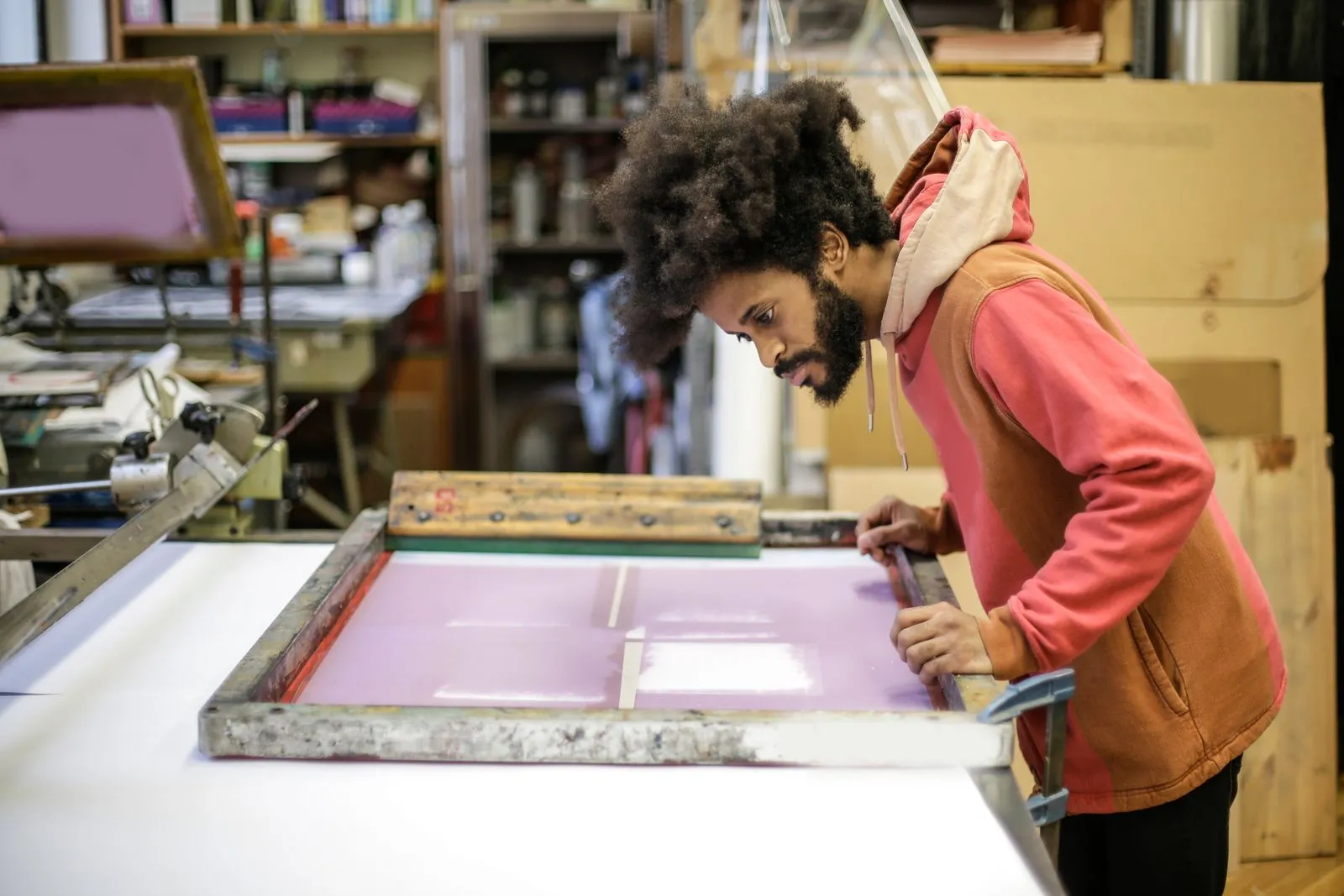
Your first printmaking class is a chance to explore how an image moves from a surface onto paper. You do not need drawing experience or a collection of supplies to get started. An instructor will usually introduce the studio, demonstrate a process, and guide you through making a small edition of prints. Knowing what tools you might use and how to prepare can help you arrive ready to experiment, ask questions, and enjoy the process.
A Look Around the Studio
Expect to work at a shared table or press station with materials set out for the class. Depending on the technique, you may see carving tools, a brayer, ink, a printing plate or block, paper, and a press. Your instructor should explain how each tool works and where to find supplies. Listen to the studio’s instructions before handling unfamiliar equipment, especially sharp tools and heavy press parts.
Printmaking can be hands-on and a little messy. Ink may get on your fingers or work surface, so studios often provide aprons, gloves, or cleanup materials. Keep food and drinks away from the work area, tie back long hair, and wear clothes you can comfortably get ink on. If you have an allergy or need an accommodation, contact the studio before class to discuss what would help.
Techniques You May Try
Relief printing is a common introduction: you carve away parts of a block, roll ink over the raised areas, then press paper onto the surface. The uncarved areas transfer the image. Many beginners start with a simple design because fine lines and small details take practice. Remember that the printed image may appear reversed, especially when it includes letters or directional shapes.
A class may instead introduce monoprinting, which creates a one-of-a-kind image from an inked plate, or a basic stencil process. Each method has its own rhythm: applying ink, positioning paper, and pressing it evenly. Your instructor will demonstrate the steps and help you adjust if a print looks too light, too dark, or uneven. Small variations are part of learning how the materials respond.
How to Prepare
Check the class details for what the studio provides and whether you should bring anything. Most introductory sessions supply the main tools and materials, but requirements vary. Bring a water bottle if permitted, and consider a notebook for recording technique tips. Arrive with enough time to check in, put on an apron, and hear the safety instructions without feeling rushed.
Choose a simple image you can reduce to clear shapes, such as a leaf, a cup, or a geometric pattern. You can also arrive without a plan and sketch during class. Ask whether the image needs to fit a specific block size or avoid text. If you use a reference image, bring a printed copy or have it ready on your phone, while keeping devices away from ink and wet prints.
What Happens After Printing
You will usually make a test print before producing additional copies. This proof shows how the ink and image are working together. Your instructor may suggest adding or removing ink, changing pressure, or adjusting the paper’s position. Take a moment to compare prints as you go; noticing what changed helps you make more deliberate choices on the next impression.
Fresh prints may need time to dry, so ask how to transport them and when they will be ready to take home. Follow the studio’s cleanup routine for tools and work surfaces, and leave sharp equipment where the instructor directs. A first class is about learning the process, not making a flawless edition. Keep a print that shows your progress, even if it has a few surprises.
A little preparation makes it easier to focus on the satisfying details of printmaking: the feel of the tools, the roll of ink, and the reveal of each impression. Keep your design simple, follow studio guidance, and give yourself room to experiment. If you’re ready to try the process, ask Pressed Line Studio about its beginner classes.